
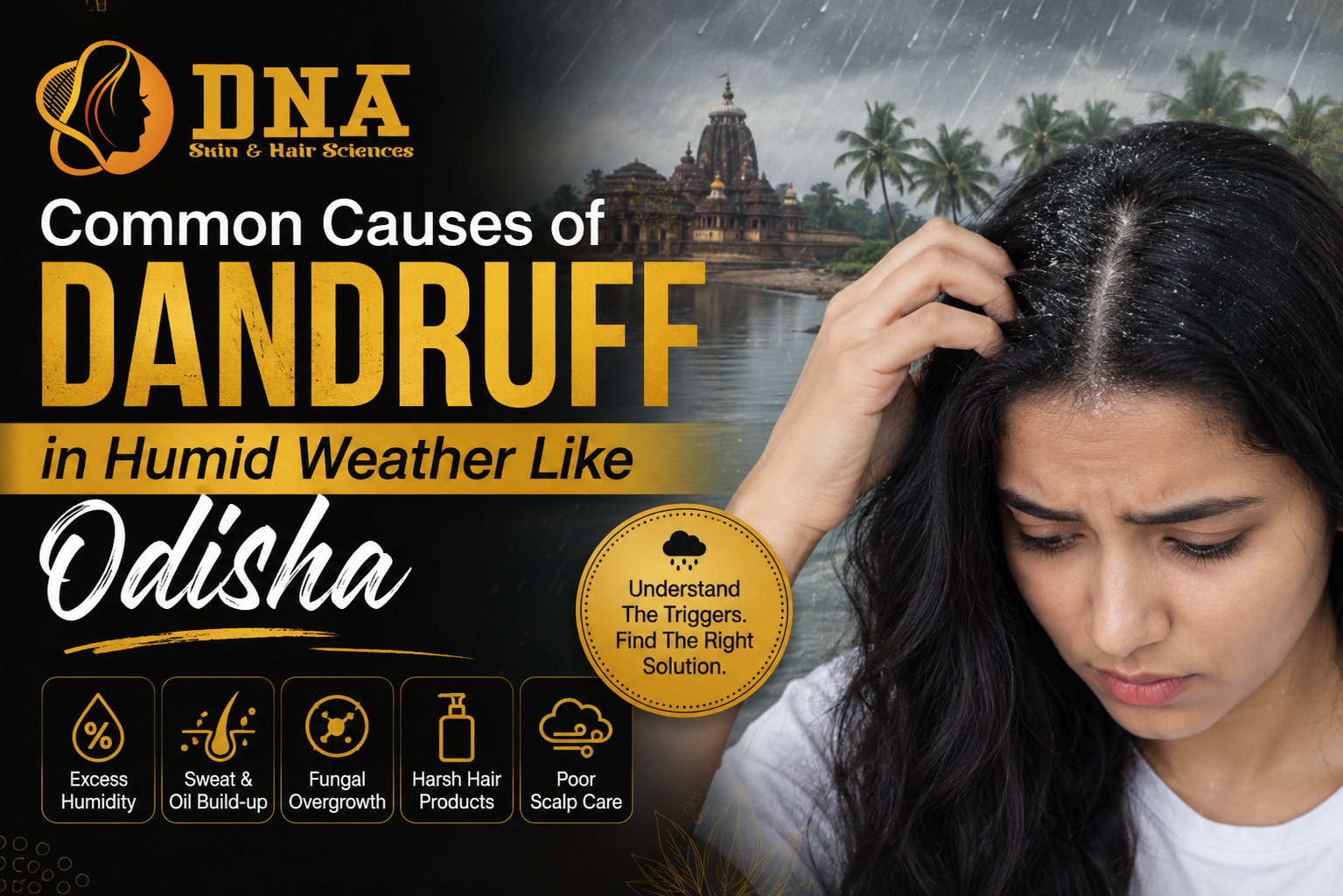
Common Causes of Dandruff in Humid Weather Like Odisha
Posted on June 5, 2026
Living in Odisha means experiencing beautiful landscapes, rich cultural heritage and a tropical climate. However, it also means dealing with intense coastal humidity. If you find yourself constantly scratching your scalp or noticing white flakes on your shoulders during summers and monsoons, you are not alone.
Many residents of cities like Bhubaneswar, Cuttack and Puri experience a significant spike in scalp itching, dandruff flakes and subsequent hair fall during humid periods. Let’s look into why this happens and how you can protect your scalp health.
Yes, humid weather can contribute to dandruff. Increased sweat, oil production, fungal growth, improper scalp hygiene and environmental factors common in Odisha can make dandruff worse and lead to itching, flaking and scalp irritation.
What Is Dandruff?
Before tackling the seasonal triggers, it is essential to understand what dandruff actually is.
Understanding Dandruff
Dandruff is a common, non contagious scalp condition characterized by the shedding of dead skin cells. On a healthy scalp, skin cells renew and shed imperceptibly. However, when the scalp environment becomes unbalanced, this process accelerates dramatically. The core elements of dandruff include:
- Dead skin cells: Shedding at an abnormally rapid rate.
- Excess scalp oil (sebum): Acting as a glue that binds dead cells into visible flakes.
- Fungal overgrowth: Specifically the microbe Malassezia, which feeds on scalp oils.
- Inflammation: Causing redness, itching and micro irritations across the skin barrier.
Common Symptoms
- Visible white or yellowish flakes on hair and clothing
- An itchy, persistent sensation on the scalp
- An oily, greasy scalp texture
- Redness and mild inflammation
- Scalp irritation when sweating
Why Is Dandruff Common in Odisha?
Odisha’s geographical position near the Bay of Bengal dictates its highly humid and warm atmospheric conditions for most of the year. This environment acts as a catalyst for scalp issues.
[High Atmospheric Humidity] + [Warm Temperatures]
                    │
                    ▼
       [Excess Sweat & Sticky Scalp]
                    │
                    ▼
     [Ideal Breeding Ground for Fungi]
                    │
                    ▼
               [DANDRUFF]
High Humidity Levels
When the air is saturated with moisture, your body’s sweat cannot evaporate efficiently. On your scalp, this leads to the accumulation of sweat. This creates a sticky, damp layer that traps atmospheric pollutants, dirt and excess sebum.
Coastal Climate Effects
Coastal zones experience warm, stable temperatures combined with high relative humidity. This combination provides the absolute ideal incubator for fungal activity. Microbes thrive in warm, dark, and damp environments, conditions your scalp perfectly provides in a coastal climate.
Long Summers and Monsoons
With summer extending into June and the monsoon season bringing heavy downpours alongside intense humidity, Odisha experiences nearly eight to nine months of damp conditions. Constant sweating and the frequent challenge of keeping your hair and scalp dry make dandruff a persistent, year round issue.
7 Common Causes of Dandruff in Humid Weather Like Odisha
Understanding the root triggers can help you modify your hair care routine to prevent flare ups.
1. Excessive Sweating
Sweating is your body’s natural cooling mechanism, but excessive perspiration mixes with natural scalp oils to create an acidic, salty and occlusive film on your skin. This alters the natural pH of your scalp, making it highly vulnerable to irritation and bacterial buildup.
2. Increased Sebum Production
High humidity and heat signal your sebaceous glands to produce more oil (sebum). An oily scalp acts as a food source for dandruff-causing organisms and clumps dead skin cells together, turning dry, invisible flaking into thick, sticky flakes.
3. Malassezia Fungal Overgrowth
This is the most critical biological factor in dandruff. The lipophilic (oil loving) yeast-like fungus Malassezia is naturally present on everyone’s scalp. However, under hot and humid coastal conditions, this fungus multiplies at an alarming rate. It breaks down sebum into oleic acid, a substance to which many individuals are highly sensitive, triggering an inflammatory reaction and rapid skin cell turnover.
4. Infrequent Hair Washing
Because of the sticky weather, skipped wash days quickly result in an accumulation of dirt, sweat and dead skin cells. If not cleansed regularly, this buildup clogs hair follicles and exacerbates yeast growth.
5. Using the Wrong Hair Products
Applying heavy hair oils (like pure coconut oil or mustard oil) and leaving them on for days is a common practice in Odisha. In humid weather, heavy oils trap moisture and sweat underneath, providing a feast for Malassezia. Similarly, harsh shampoos containing strong sulfates can over dry the scalp, leading to a rebound overproduction of sebum.
6. Stress and Lack of Sleep
High stress levels and poor sleep release cortisol, a hormone that triggers systemic inflammation. This weakens your skin’s natural barrier defense mechanisms, making your scalp more sensitive and prone to severe dandruff flare-ups.
7. Poor Diet and Nutritional Deficiencies
A diet high in processed sugars, refined carbohydrates, and unhealthy fats can promote inflammatory responses in the body. Furthermore, deficiencies in crucial micronutrients, specifically Zinc Zn, Vitamin B complex, and Iron Fe, directly impact skin cell renewal and scalp health.
Can Humid Weather Cause Hair Fall Too?
There is a distinct, indirect connection between humid weather, dandruff and increased hair fall.
Dandruff ➔ Scalp Inflammation ➔ Intense Itching ➔ Weakened Hair Roots ➔ Increased Hair Shedding
When dandruff causes severe inflammation, the physical integrity of the hair follicles is compromised. Additionally, constant scratching damages the hair shafts and roots, leading to temporary hair shedding.
Q: Does dandruff cause hair loss?
Ans: Dandruff does not directly cause permanent hair loss, but severe dandruff can weaken hair roots and increase temporary hair shedding due to scalp inflammation and scratching.
Signs Your Dandruff Is Becoming Serious
While mild dandruff is a cosmetic nuisance, severe cases require medical attention. Look out for these signs:
- Severe, unrelenting itching that disrupts your daily activities or sleep.
- Red, inflamed patches or scaling along the hairline, behind the ears, or on the eyebrows (suggestive of Seborrheic Dermatitis).
- Thick, greasy, yellow flakes that cling to the scalp.
- Persistent dandruff that does not respond to over the counter anti dandruff shampoos after 2-3 weeks of regular use.
- Excessive hair fall accompanied by scalp pain or tenderness.
How to Prevent Dandruff During Odisha’s Humid Season
Preventing dandruff in a humid climate requires consistent daily care and a shift in product choices.
- Wash Hair Regularly: Wash your hair 3 to 4 times a week during hot and humid months to wash away sweat, pollution, and excess sebum.
- Use a Suitable Anti-Dandruff Shampoo: Look for active ingredients such as Ketoconazole, Zinc Pyrithione ZPT, Salicylic Acid, or Selenium Sulfide. Rotate these with a mild, daily cleansing shampoo.
- Keep the Scalp Dry: Avoid tying up wet hair. Ensure your scalp is completely dry after washing or getting caught in monsoon rains.
- Avoid Excess Hair Oil: Limit the use of heavy oils during peak humid months. If you must oil your hair, apply it for just 30 minutes before washing.
- Eat a Balanced Diet: Incorporate foods rich in zinc (nuts, seeds, legumes), Vitamin B (whole grains, eggs, leafy greens) and antioxidant rich local produce.
- Manage Stress: Practice meditation, deep breathing, or yoga to keep your cortisol levels and subsequent inflammation in check.
| Routine Phase | Recommended Steps | Purpose |
|---|---|---|
| Morning | • Wash with a gentle, sebum regulating shampoo.
• Thoroughly dry your hair roots. • Use an umbrella or wide brimmed hat outdoors. |
• Removes nighttime sweat accumulation.
• Prevents dampness. • Protects the scalp from intense tropical UV rays. |
| Evening | • Let your scalp air out if it’s sweaty, do not tie it up immediately.
• Gently brush your hair to distribute natural oils and loosen dirt. |
• Prevents moisture buildup overnight.
• Promotes scalp microcirculation. |
| Weekly | • Apply a targeted anti dandruff shampoo containing Ketoconazole or Salicylic Acid (leave on for 5 minutes before rinsing).
• Use a lightweight, silicone free scalp exfoliating scrub. |
• Controls Malassezia fungal populations.
• Safely clears dead skin buildup without clogging follicles. |
When Should You See a Dermatologist?
If your dandruff remains stubborn despite using quality anti dandruff shampoos, or if you notice raw, bleeding areas from scratching, it is time to schedule a visit with a dermatologist. Conditions like Seborrheic Dermatitis, scalp psoriasis, or fungal infections like tinea capitis mimic dandruff but require prescription strength topical steroids, antifungal creams, or oral medications.
Myths vs Facts About Dandruff
| Myth | Fact |
|---|---|
| Dandruff is caused by a dry scalp only. | Dandruff can also occur and is often worse, due to an oily scalp. |
| Heavy hair oil cures dandruff. | Excess oil can act as food for scalp fungi and may worsen dandruff, especially in humid weather. |
| Dandruff is highly contagious. | No. Dandruff is an individual inflammatory response to naturally occurring scalp yeast and cannot be spread from person to person. |
| Washing your hair daily causes dandruff. | Proper, gentle washing can help control excess oil, remove flakes and reduce dandruff causing yeast on the scalp. |
Frequently Asked Questions
Why does dandruff increase during humid weather?
Humidity increases sweating and sebum production. This oily, moist environment is ideal for the rapid multiplication of Malassezia fungus, which triggers dandruff.
Is dandruff more common in Odisha?
Yes, due to Odisha’s long, hot summers, intense monsoons and high coastal humidity levels, residents are highly prone to sweating and yeast related scalp irritation.
Does sweating cause dandruff?
Sweat itself does not cause dandruff, but sweat accumulation changes the scalp pH and mixes with oils to create a breeding ground for yeast, triggering dandruff.
Can dandruff lead to hair loss?
Mild dandruff does not cause hair loss. However, severe dandruff causes inflammation and itching, leading to aggressive scratching that can damage follicles and cause temporary hair fall.
Which shampoo is best for dandruff in humid climates?
Shampoos containing active ingredients like Ketoconazole, Zinc Pyrithione ZPT, or Salicylic Acid are best suited to combat fungal overgrowth and lift sticky flakes in humid conditions.
How often should I wash my hair during the monsoon?
During monsoons, it is highly recommended to wash your hair 3 to 4 times a week using a mild cleanser to remove rainwater, atmospheric acids, sweat and environmental grime.
When should I visit a dermatologist for dandruff?
Visit a doctor if your dandruff is accompanied by severe itching, oozing, painful red patches, hair thinning, yellow crusty flakes, or if it doesn’t improve after two weeks of targeted anti dandruff treatment.