
What Is PRP Therapy for Hair Loss? Benefits, Cost & Results Explained
Posted on March 16, 2026
In an era where aesthetic confidence is closely tied to personal well being, hair loss has emerged as a significant concern for millions. Whether it is the result of high-stress environments, genetic predispositions, or hormonal shifts, the emotional impact of thinning hair is universal. While the market is flooded with miracle shampoos and topical oils, medical science has provided a more robust, biological solution: Platelet Rich Plasma (PRP) Therapy.
This guide explores the intricacies of PRP therapy, a cutting edge, non surgical treatment that has become the gold standard for those seeking to reclaim their hair density without going under the knife.
What Is PRP Therapy?
PRP stands for Platelet-Rich Plasma. At its core, this therapy is a form of regenerative medicine that harnesses the body’s innate ability to heal itself.
Our blood is primarily composed of four components: red blood cells, white blood cells, plasma and platelets. While platelets are best known for their role in clotting blood, they are also biological goldmines of growth factors. These growth factors are responsible for tissue repair, cell regeneration and, crucially, the stimulation of hair follicles.
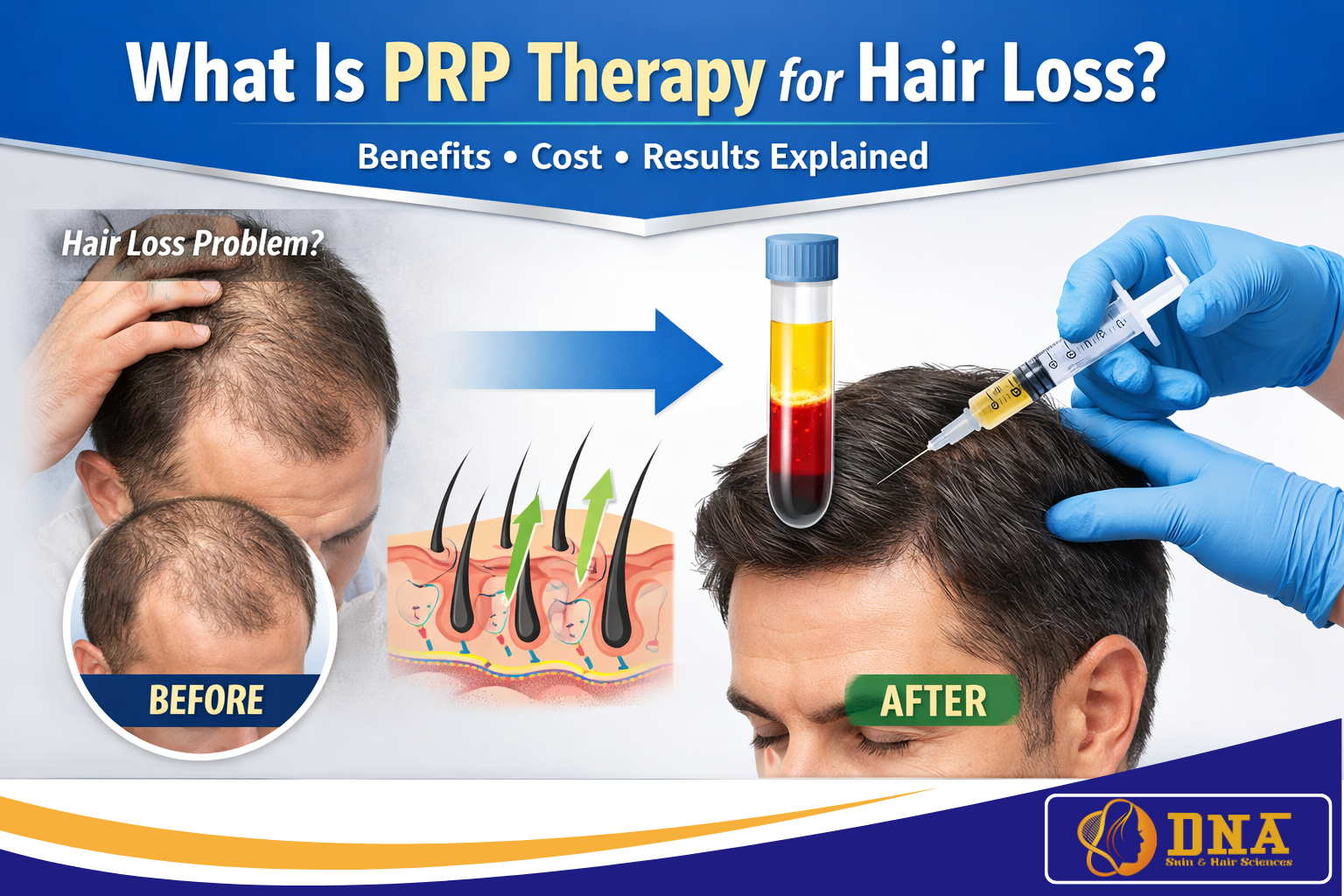
PRP therapy involves concentrating these platelets to levels significantly higher than what is typically found in the bloodstream and injecting them directly into the scalp. By doing so, dermatologists can jumpstart dormant hair follicles, pushing them from a resting phase back into an active growth phase.
How PRP Therapy Works for Hair Loss:
Understanding the science behind PRP helps demystify the procedure. It is a precise, multi-step medical process usually completed within an hour.
1. Blood Collection
The process begins much like a routine blood test. A small amount of blood (typically 10ml to 30ml, depending on the area being treated) is drawn from the patient’s arm. Because the treatment uses your own blood, there is zero risk of an allergic reaction or rejection.
2. The Centrifugation Process
The collected blood is placed into a specialized machine called a centrifuge. This machine spins at high speeds to separate the blood components based on their density.
3. PRP Extraction
After about 10-15 minutes of spinning, the blood separates into three distinct layers:
-
Platelet-poor plasma (PPP)
-
Platelet-rich plasma (PRP)
-
Red blood cells
The middle layer, the buffy coat or the concentrated PRP, is carefully extracted. This serum contains 5 to 10 times the concentration of growth factors found in normal blood.
4. Injection into the Scalp
Using a very fine needle, the dermatologist injects the concentrated PRP into the layers of the scalp where the hair follicles reside. The injections are typically spaced about half an inch apart over the area of thinning hair.
How these growth factors work:
-
Increased Blood Supply: They promote angiogenesis (the formation of new blood vessels), ensuring the follicle receives more nutrients.
-
Follicle Stimulation: They signal sleepy follicles to begin producing hair again.
-
Increased Hair Shaft Diameter: Even if new hair doesn’t sprout immediately, existing hairs often become thicker and stronger.
Benefits of PRP Therapy for Hair Loss
Why is PRP the preferred choice for modern hair restoration? The benefits extend beyond just growing hair.
1. Completely Natural
Since the medicine is derived from your own body, there are no synthetic chemicals, drugs, or foreign substances involved. This eliminates the risk of communicable diseases or adverse immune responses.
2. Non Surgical and Minimally Invasive
Unlike a hair transplant, which involves incisions, grafts and sutures, PRP is an injectable treatment. There are no scars, and the scalp remains intact.
3. Minimal Downtime
In today’s fast paced world, most people cannot afford weeks of recovery. With PRP, you can literally have the procedure during your lunch break and return to work immediately after. You can wash your hair the very next morning.
4. Comprehensive Scalp Health
PRP doesn’t just target the hair; it improves the environment of the scalp. By increasing collagen and blood flow, it creates a healthier foundation for long-term hair health.
5. Versatility
It can be used as a standalone treatment or in conjunction with other therapies like Minoxidil, Finasteride, or even post hair transplant to speed up the healing of grafts.
Who Is the Right Candidate for PRP Therapy?
While PRP is a powerful tool, it is not a one size fits all cure for every stage of baldness.
Ideal Candidates:
-
Early Stage Thinning: PRP is most effective when the hair follicle is still alive but miniaturizing (getting thinner).
-
Androgenetic Alopecia: This is the most common form of hair loss (pattern baldness) in both men and women.
-
Stress-Induced Hair Fall: Also known as Telogen Effluvium, where hair falls out due to a shock to the system.
-
Hormonal Imbalance: Women experiencing thinning due to PCOS or menopause often see great results.
Who Should Avoid It?
-
Complete Baldness: If the scalp is shiny and smooth, the hair follicles are likely dead. PRP cannot resurrect a dead follicle; it can only recharge a weak one.
-
Active Infections: Any scalp infection must be cleared before treatment.
-
Blood Disorders: Individuals with low platelet counts or chronic liver disease may not be suitable candidates.
The Procedure: What to Expect During Your Appointment
If you are nervous about needles or medical procedures, knowing what happens in the room can help ease your mind.
-
Consultation: Your dermatologist will use a Trichoscope (a specialized magnifying camera) to look at your scalp and determine the density of your hair and the health of your follicles.
-
Numbing: While the needles are very fine, many clinics apply a topical numbing cream or use a local anesthetic to ensure the procedure is virtually painless.
-
The Sting: You might feel a tiny pinch or a tight sensation as the fluid enters the scalp, but this lasts only seconds.
-
Post Care: Your doctor may advise you to avoid vigorous exercise for 24 hours to prevent sweating and irritation at the injection sites.
Timeline and Frequency
Hair growth is a slow biological process. You won’t walk out of the first session with a full head of hair.
-
Initial Phase: 3 to 4 sessions are usually required to see significant change.
-
Gap: These sessions are spaced 4 to 6 weeks apart.
-
Maintenance: Once the desired results are achieved, a single maintenance session every 6 to 12 months is often recommended to keep the follicles stimulated.
PRP Therapy Cost for Hair Loss
The cost of PRP therapy is an investment in your appearance and self esteem. Several factors influence the final price:
-
Geographic Location: Clinics in major metropolitan hubs may have higher overheads.
-
Clinic Reputation: Highly experienced dermatologists using advanced separation kits often charge a premium.
-
The Technology: Some clinics use Double Spin methods or specialized PRP tubes that yield a higher concentration of platelets, which can be more expensive.
Estimated Cost in India:
On average, a single session of PRP therapy ranges from ₹4,000 to ₹10,000. Most patients should budget for a package of 4 sessions to see the best results.
PRP Therapy Results: When Will You See Hair Growth?
Patience is key when undergoing PRP. Because we are working with your body’s natural growth cycles, the results manifest gradually.
| Timeline | What to Expect |
| Month 1 | A noticeable reduction in the amount of hair left in your brush or shower drain. |
| Months 2-3 | The quality of hair improves. Hair feels less wispy and has more volume. |
| Months 4-6 | New baby hairs begin to sprout in the thinning areas. This is the stage where friends and family begin to notice the difference. |
Is PRP Therapy Safe?
Yes, PRP therapy is exceptionally safe. Because it is autologous (derived from your own body), there is no risk of:
-
Allergic reactions
-
Hypersensitivity
-
Infection from foreign tissue
Potential Side Effects (Mild and Temporary):
-
Mild tenderness at the injection site.
-
Slight swelling of the forehead (usually subsides in 24-48 hours).
-
Temporary redness.
PRP Therapy vs. Hair Transplant: Which One Do You Need?
Choosing between PRP and a hair transplant depends entirely on the current state of your hair loss.
| Feature | PRP Therapy | Hair Transplant |
| Type | Non Surgical / Injectable | Surgical / Minimally Invasive |
| Best For | Thinning hair and early balding | Significant bald spots / Receding hairline |
| Recovery | Zero downtime | 7-10 days for scabs to heal |
| Maintenance | Requires periodic sessions | Permanent (the transplanted hair stays) |
| Cost | Affordable per session | Higher upfront cost |
Pro Tip: Many surgeons actually recommend PRP sessions after a hair transplant to ensure the newly transplanted grafts have the best possible chance of survival and growth.
Conclusion:
Hair loss doesn’t have to be a permanent sentence. With advancements like PRP therapy, you have a scientifically backed, safe, and natural way to fight back against thinning hair. By utilizing your body’s own healing power, you can restore not just your hair, but your confidence as well.
PRP Therapy for Hair Loss in Bhubaneswar
If you are located in or near Odisha and are struggling with hair fall, it is time to seek professional help. At DNA Skin & Hair Sciences, Bhubaneswar, we specialize in advanced hair restoration. Our expert dermatologists use state-of-the-art centrifugation technology to ensure you get the highest concentration of growth factors for maximum results.
Ready to see if you are a candidate for PRP?
FAQs
Is PRP therapy painful?
The procedure causes minimal discomfort and is generally well tolerated.
How many PRP sessions are required?
Most patients need 3-4 sessions initially.
Is PRP therapy permanent?
Results can last long with maintenance sessions and proper hair care.
Can PRP stop hair fall completely?
It significantly reduces hair fall and improves hair growth in many patients.