
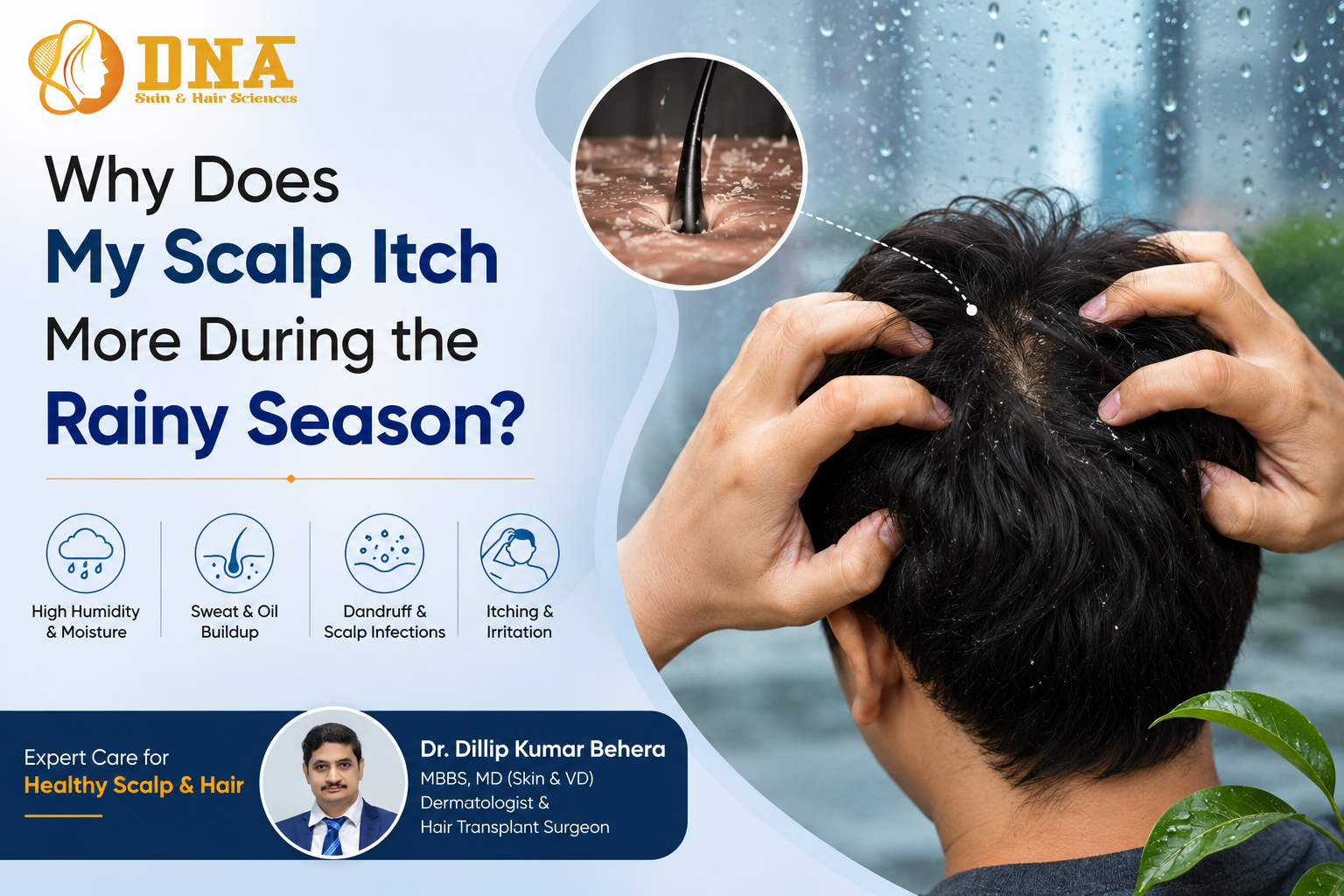
Why Does My Scalp Itch More During the Rainy Season?
Posted on September 2, 2026
If your scalp starts itching the moment the rains set in, you are not imagining it. Monsoon weather brings a mix of high humidity, sweating, excess scalp oil, dandruff flare ups, product buildup and increased microbial growth, all of which can leave your scalp feeling itchy, uncomfortable and irritated.
For most people, this kind of itching is mild and temporary. But when it becomes persistent, severe, or is accompanied by redness, flaking or hair changes, it may point to an underlying scalp condition that needs proper evaluation rather than guesswork.
Your scalp may itch more during the rainy season because increased humidity and sweating can make the scalp oily and create an environment that worsens dandruff, irritation and some scalp infections.
1. Why Does the Rainy Season Cause an Itchy Scalp?
1.1 High Humidity and Excess Scalp Moisture
Monsoon air carries far more moisture than usual. This constant humidity keeps the scalp from drying properly, even after a shower or a walk in the rain. When moisture lingers on the scalp for extended periods, it tends to mix with natural oils and sweat, creating a damp, warm environment that can trigger irritation and itching.
1.2 Increased Sweating
Humid weather makes the body sweat more and the scalp is no exception. Sweat that isn’t washed away regularly can accumulate at the roots. This is especially true for anyone who wears a helmet or cap for long commutes during the rains, trapped heat and moisture underneath can make the scalp feel itchy, sticky and uncomfortable by the end of the day. Keeping the scalp clean and genuinely dry is one of the simplest ways to reduce this discomfort.
2.3 Dandruff and Seborrheic Dermatitis
Dandruff is a common scalp condition where the skin sheds visible flakes, often along with itching. During monsoon, changes in scalp oil production combined with the humid environment can make dandruff more noticeable than usual. A related but more inflamed condition, seborrheic dermatitis, may show up as itching, redness and greasy, flaky scales and can be easily mistaken for simple dandruff.
1.4 Fungal and Other Scalp Infections
Some scalp infections can cause itching, scaling or visible inflammation and humid weather can make conditions more favourable for certain organisms to thrive. That said, not every itchy scalp during monsoon is an infection, it’s important not to jump to conclusions. Proper diagnosis by a dermatologist is the only reliable way to know what’s actually causing the itch before starting any treatment.
1.5 Product Buildup
Hair oils, styling creams, serums, dry shampoo and other products can build up on the scalp over time, especially when washing routines get disrupted during the rains. This buildup can trap dirt, sweat and moisture close to the skin, contributing to irritation and itching.
1.6 Wet Hair and Poor Scalp Drying Habits
Stepping out in the rain or sweating heavily and then leaving your scalp damp for hours can create the kind of environment where discomfort and certain scalp problems are more likely to develop. Towel drying gently and allowing hair to air dry (rather than tying it up wet or covering it immediately) can make a noticeable difference.
2. Common Causes of an Itchy Scalp During Monsoon
| Cause | Common Signs |
|---|---|
| Dandruff | White flakes + itching |
| Seborrheic dermatitis | Itching + redness + greasy/flaky scales |
| Scalp irritation | Burning, itching or sensitivity |
| Scalp infection | Scaling, redness, inflammation or other changes |
| Product buildup | Oily/dirty feeling + itching |
| Dry scalp | Dryness + fine flakes |
3. What Are the Symptoms You Should Not Ignore?
While occasional monsoon itching is usually harmless, certain symptoms deserve prompt attention:
- Persistent or worsening itching
- Significant redness or swelling
- Pain or tenderness on the scalp
- Pus or oozing from any area
- Thick scales or crusting
- Noticeable hair loss or unusually broken hairs
- Circular or scaly patches
- Symptoms that don’t improve with basic scalp care
Key point: Don’t assume every itchy scalp is dandruff. Some symptoms need a professional eye to rule out infections or other underlying conditions.
4. How to Stop Scalp Itching During the Rainy Season
4.1 Wash Your Scalp Regularly
Choose a washing frequency that matches your scalp type and oiliness, oilier scalps may need more frequent washing during humid months, while drier scalps should avoid unnecessarily harsh cleansing that can strip natural moisture.
4.2 Keep Your Scalp Dry
Dry your hair and scalp thoroughly after washing or getting caught in the rain. Avoid tying up or covering wet hair for long periods, as trapped moisture is one of the biggest contributors to monsoon scalp discomfort.
4.3 Avoid Sharing Combs, Towels and Personal Hair Accessories
This is particularly important if an infectious scalp condition is suspected, as sharing personal items can spread it further.
4.4 Clean Helmets, Caps and Pillowcases
These come into direct, repeated contact with your scalp. Regular cleaning helps reduce the buildup of sweat, oil and microbes that can worsen itching.
4.5 Avoid Excessive Hair Products
Be mindful of heavy oils and styling products, especially if you notice they are contributing to scalp buildup during humid weather.
4.6 Don’t Scratch an Itchy Scalp
Scratching may feel like relief in the moment, but it can damage the skin barrier and worsen irritation. If the itch is hard to resist, keep your nails short to minimise damage.
5. Does Rainwater Cause an Itchy Scalp?
Rainwater itself isn’t necessarily the sole cause of scalp itching. It’s usually the combination of factors around it, getting wet, prolonged scalp dampness, environmental exposure, increased sweating and inadequate drying afterward, that contributes to the discomfort. If your itching persists well beyond a single rainy day, it’s worth having it evaluated rather than automatically blaming the rainwater.
6. Is an Itchy Scalp During Monsoon a Sign of Dandruff?
Not always. Here’s a general way to think about it:
- Itching + flakes: may point to dandruff
- Itching + redness/greasy scales: may suggest seborrheic dermatitis
- Intense itching + unusual patches, scaling or hair changes: needs dermatological evaluation
These are general patterns, not a diagnosis. Only a dermatologist can confirm what’s actually happening on your scalp after a proper examination.
7. When Should You See a Dermatologist for an Itchy Scalp?
Consider a professional evaluation if:
- Itching persists despite appropriate basic care
- Symptoms are severe or getting worse
- There is redness, inflammation or pain
- You notice sores, crusting or discharge
- Hair loss occurs along with scalp symptoms
- You suspect an infection
- The condition keeps coming back
If your scalp itching continues during the rainy season, consult a dermatologist to identify the underlying cause and get an appropriate treatment plan.
8. Frequently Asked Questions
1. Why does my scalp itch more during the rainy season?
Higher humidity and increased sweating keep the scalp damp for longer, which can worsen oiliness, dandruff and irritation.
2. How can I stop scalp itching during monsoon?
Wash your scalp based on your hair type, dry it thoroughly after getting wet, avoid heavy product buildup, keep headgear and pillowcases clean, and avoid scratching.
3. Does humidity cause an itchy scalp?
Humidity itself doesn’t directly cause itching, but it creates a warm, moist environment on the scalp that can make oiliness, dandruff and irritation more likely.
4. Why does dandruff increase during monsoon?
Changes in scalp oil production, combined with prolonged moisture and humidity, can make existing dandruff more visible and harder to manage.
5. Can getting wet in the rain cause scalp problems?
Getting wet occasionally isn’t usually a problem on its own, but combined with prolonged dampness, sweating and poor drying habits, it can contribute to scalp discomfort.
6. Should I wash my hair more often during monsoon?
It depends on your scalp type. Oilier scalps may benefit from more frequent washing, while others should stick to a routine that doesn’t strip the scalp of natural moisture. A dermatologist can help you find the right frequency.
7. How do I know if my itchy scalp is dandruff or an infection?
Flaking with mild itching often points to dandruff, while redness, greasy scales, pain, crusting or unusual patches may suggest something more, such as seborrheic dermatitis or an infection. A clinical evaluation is the only way to know for certain.
8. When should I see a dermatologist for scalp itching?
If itching is persistent, severe, accompanied by redness, pain, sores or hair loss, or keeps recurring despite basic care, it’s time to consult a dermatologist.
9. Conclusion
Monsoon humidity and increased sweating can make existing scalp issues more noticeable, and conditions like dandruff, seborrheic dermatitis, irritation and infections can all present as itching. Good scalp hygiene, regular but appropriate washing, thorough drying, clean headgear and minimal product buildup, goes a long way in keeping the itch under control. But if the itching is persistent, severe or recurring, it’s best evaluated by a dermatologist rather than managed with guesswork.
Experiencing persistent scalp itching, dandruff or hair problems this monsoon? Consult the dermatology team at DNA Skin & Hair Sciences for personalized evaluation and care.